

Sixty years ago today, a coal tip slid onto a village school. We remember the 144 people who died, and the many who came to help, including a young man with a new van.
At 9:15am on Friday 21 October 1966, the children of Pantglas Junior School had just finished morning assembly. They had sung "All Things Bright and Beautiful". Down the road on Moy Road, families were getting on with their chores. Most of the men were already underground.
People heard what they thought was thunder. A waterlogged colliery tip had moved, and it came down onto the village below. It buried the school, a farm and a row of houses. 144 people lost their lives. 116 of them were children.
Today, sixty years on, we remember every one of them, and the families and community of Aberfan who have carried that loss ever since.
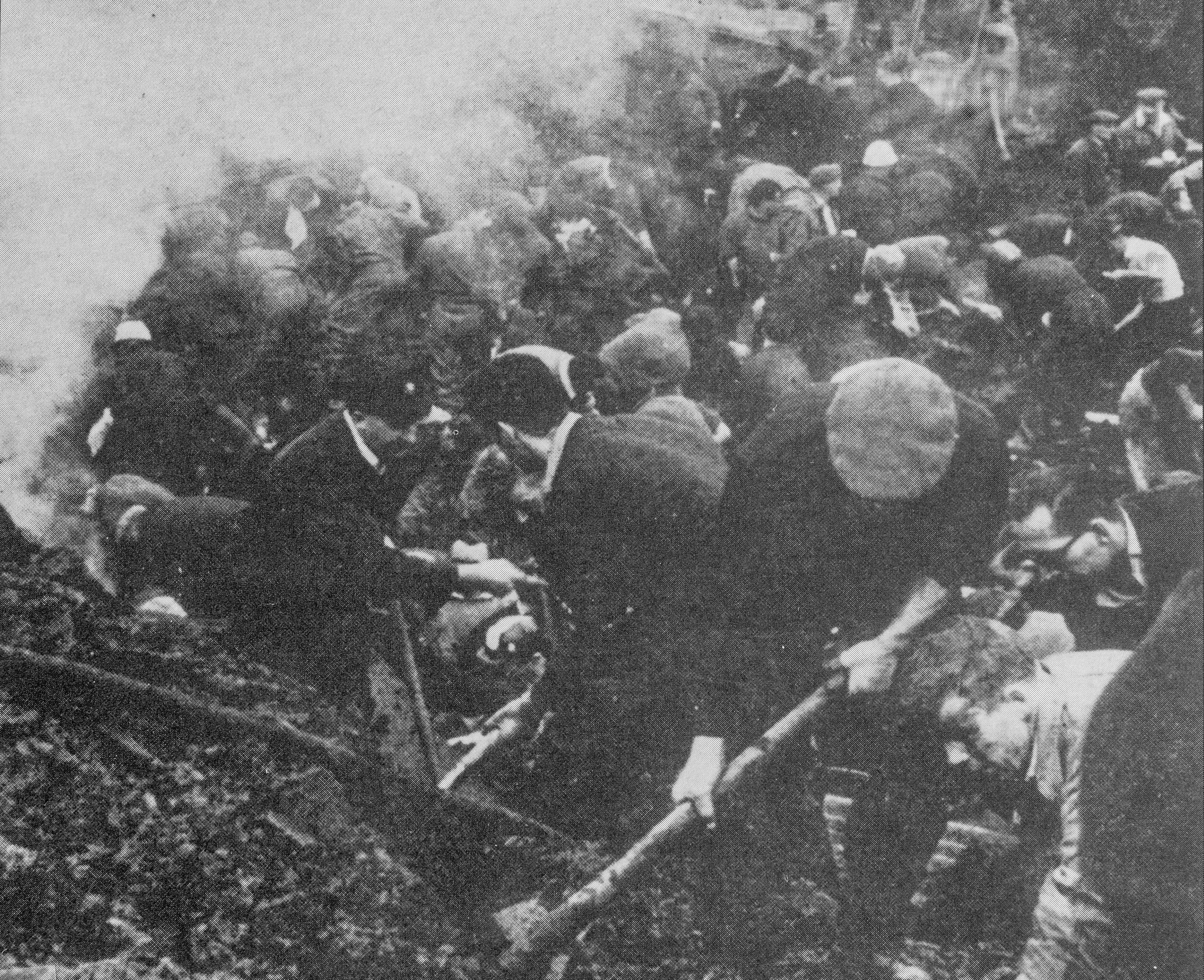 Image (right) "The men dug at frantic speed, hoping against hope to find someone alive." Aberfan, 1966.
Just as they were
Within half an hour, St John Ambulance Brigade members from the local colliery were at the scene. Members from the Aberfan, Merthyr Vale, Troedyrhiw, Treharris and Merthyr Divisions came straight after. Our history of that day records that there was "no time then to think of smart uniforms or even of armbands". They dug just as they were, knee-deep in slurry.
They were never alone. Miners, the mines rescue teams, police, firefighters, soldiers, the Red Cross, the Salvation Army, the civil defence service and hundreds of local people worked side by side. So many offers of help came in from across Wales and England that not all of them could be used.
As the days went on, St John members staffed five rest centres, a Forward Medical Aid Unit, and posts at the site and the tip. Some were detailed to walk among the rescuers and persuade the most exhausted to rest. Nurses from our Merthyr Nursing Division took over ward duties at St Tydfil's Hospital so its own teams could go to the village. Swansea member Edgar Phelps took a week's leave to help throughout.
On the bitterly cold day of the funeral, our members walked quietly with the bereaved and offered a steadying arm. More than 200 St John men and women served during that week. Many of them, as the Chief Commissioner for Wales said at the time, went "when their own children were involved".
A phone call and a new van
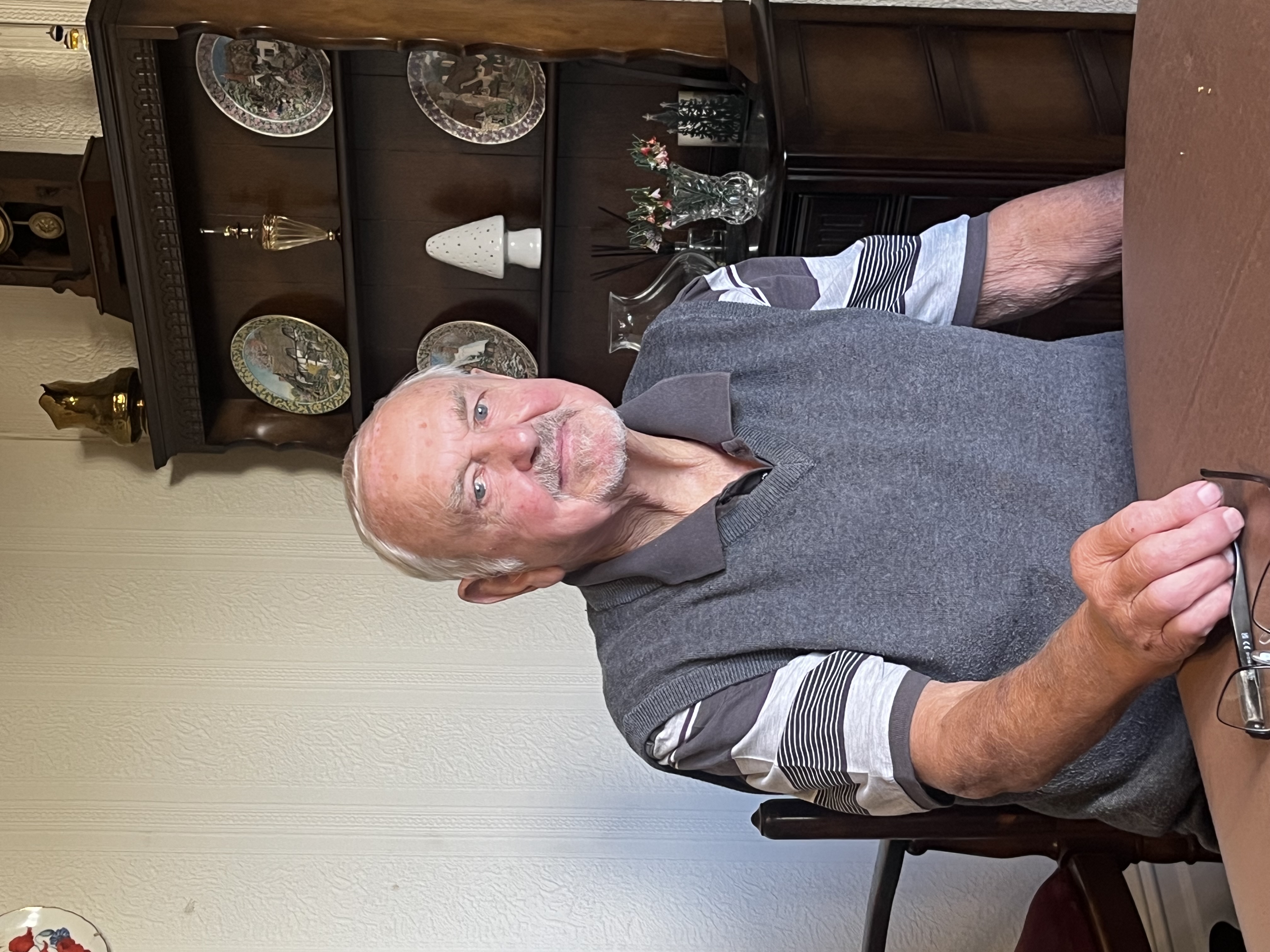 Image (right) David Wilson, 83.
David Wilson was 23 in 1966. He worked in his family's roofing business, and the family had just bought a brand-new van.
On the day of the disaster, his old Scoutmaster rang. Herbie Gibbs had taught David first aid as a boy, and he was a Superintendent with St John Ambulance. He had St John nurses who needed to get to Aberfan. Could he use the van?
"I said, yeah, fine," David remembers. "The van was full of nurses. They were all St John Ambulance nurses, and I was very, very impressed."
As they reached the valley, around 100 cars were queued to get in. Herbie told David to pass them. A policeman put up his hand to stop them. "Please sir," Herbie said, "we've got nurses in the back." The policeman jumped onto the side of the van and rode with them, clearing the way.
The nurses went into the school. David was given wellies and a spade, and he joined the hundreds of men on the tip.
The man in the army jumper
One small detail from that day has stayed with David. He was wearing an ex-army jumper he'd bought for work. On the tip, when he spoke, people listened. They assumed he was a soldier.
David saw that much of the digging was on the slope, while anything the slurry had carried would be lower down. He asked whether anyone knew where the road used to run. A local man showed him. David asked for a digger and lorries, and organised volunteers to search each load with care.
Later someone asked his rank. "I said, what do you mean, what rank?" he says. "It was just an ex-army jumper I bought for work."
David worked through the night and into the next day. During that time he helped recover one of those who had died. It has stayed with him ever since.
When Herbie came to find him, David drove the nurses home. They had spent their time laying out those who had died, many of them children.
"I could hear them sobbing in the back of the van," he says. "Obviously they'd seen a lot."
Never forgotten
David couldn't sleep for many nights afterwards. In the end he wrote a poem, "just for me to remember every detail", though he says he never needed to. "It's in my mind all the time. I've never, ever forgotten."
He has been back to the anniversary service three or four times. Each time he stood quietly, gave no names and went home. "I didn't push myself forward," he says.
We're grateful he has now shared his story with us. "I was pleased that I was able to help," he says, "to be of some assistance."
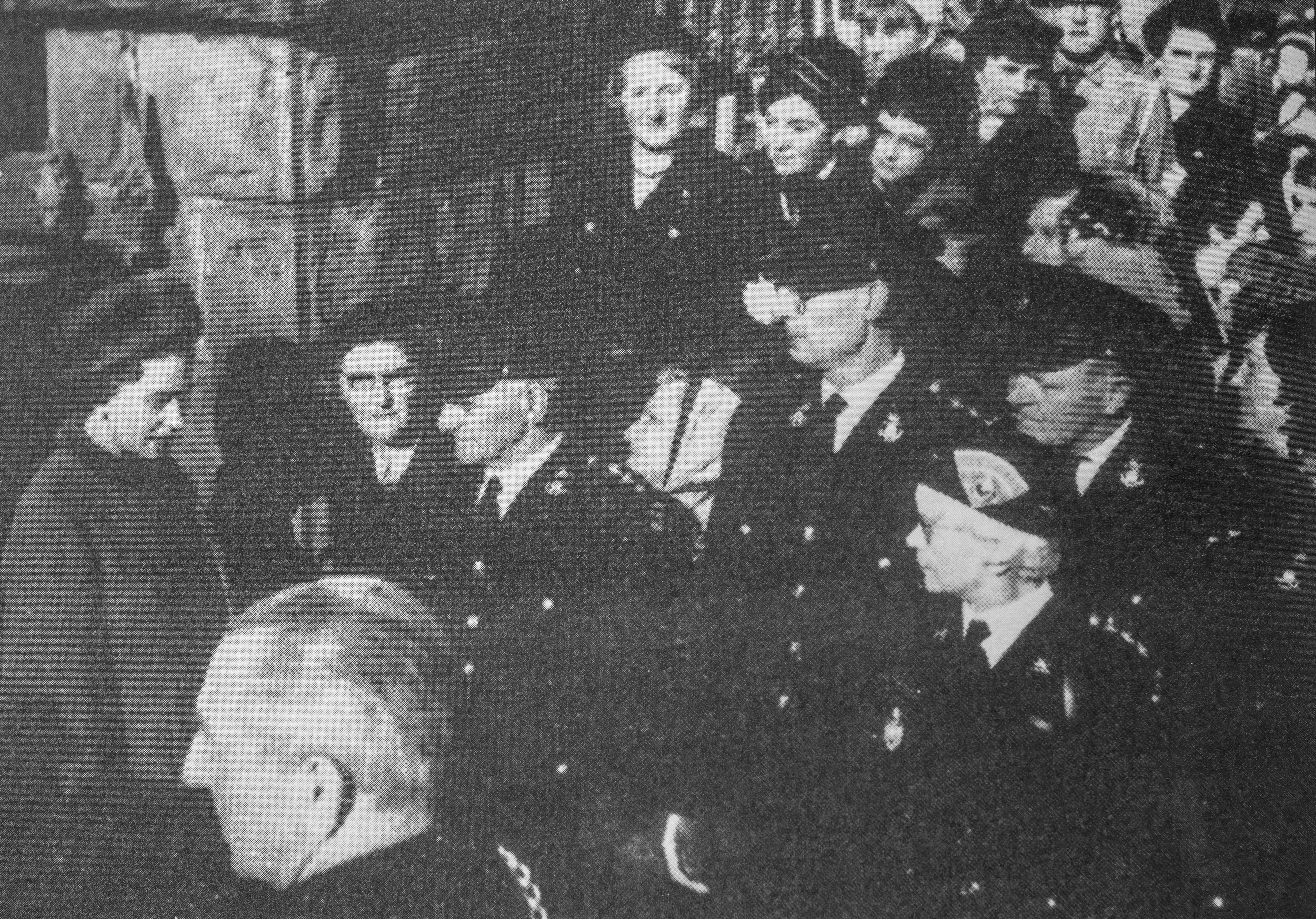 Image (right) The Queen speaks to Brigade members at Aberfan, 1966.
Remembering together
After Aberfan, the Chief Commissioner for Wales wrote that the disaster had given every member "the added desire to make ourselves more efficient, for who knows where the next blow will fall".
That thought is still at the heart of what our volunteers do: being there, just in case.
Today, we hold the children and adults of Aberfan in our thoughts, alongside their families and everyone who answered the call. Please join us, and communities across Wales, in the minute's silence on 21 October.
If this story brings back difficult memories, you don't have to carry them alone. Please contact the Samaritans on 116 123 if you have been affected and would like to talk to someone.